
The Colorado River Basin: Supporting 40 Million Lives and a $Trillion Economy
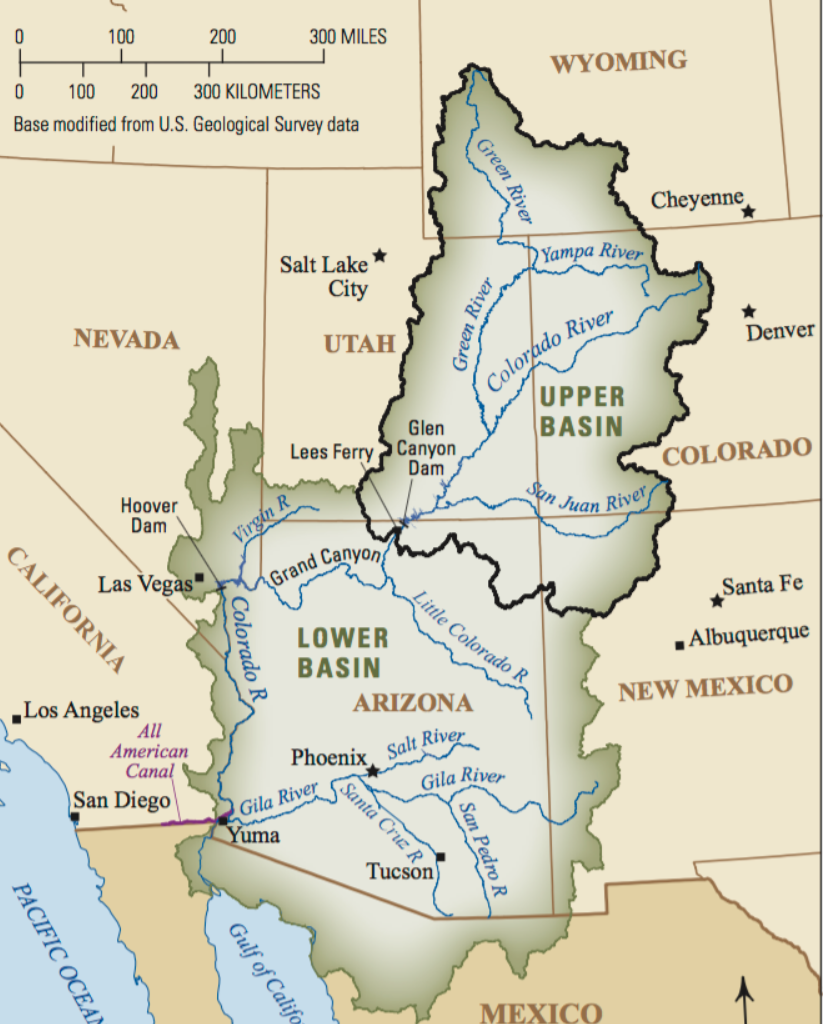
Colorado River Basin
August 2, 2026
The Hydraulic Foundations of Civilization
Water may be the most valuable substance in the known universe. While modern astronomy has identified water throughout our Solar System and beyond, Earth remains the only known world where abundant liquid water is known to sustain a complex biosphere and human civilization.
Every city, farm, industry, urban center, and ecosystem on Earth ultimately depends upon it.
Throughout North American history, a handful of great water systems have shaped the destiny of entire regions:
the Mississippi-Missouri Basin enabled the agricultural and commercial rise of the American interior;
the Great Lakes and St. Lawrence system powered industrialization and continental trade; and
the Columbia River transformed the Pacific Northwest through hydropower and navigation.
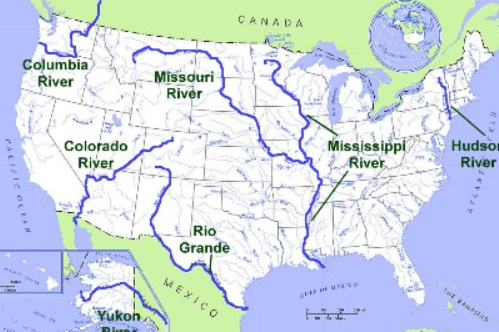
Major US River Systems
Yet few water systems have been asked to do more with less than the Colorado River.
How Water Built the American West — And Why the Next Century Requires an Abundance Infrastructure Mindset
The Colorado River Basin is one of the most important infrastructure systems in North America. Supplying water to approximately 40 million people and supporting a regional economy valued at roughly $1 trillion, the basin serves as the hydraulic foundation of the modern American West. From Los Angeles and San Diego to Phoenix, Las Vegas, Tucson, Denver, and countless agricultural communities, the Colorado River system supports cities, food production, energy generation, industry, and economic activity on a continental scale.
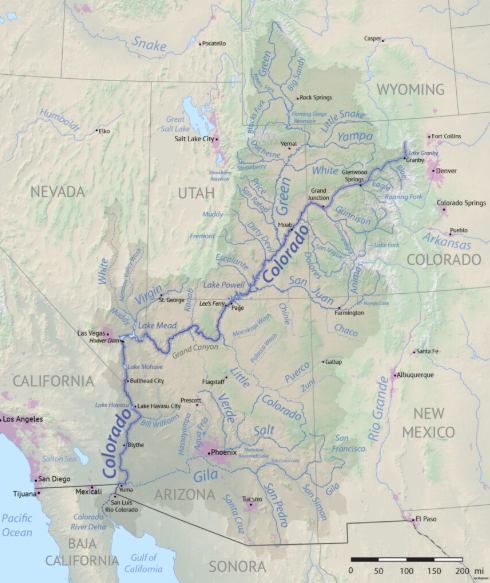
Map of Colorado River
Yet despite its importance, most people only think about the river when water restrictions are announced, reservoir levels begin to fall, or drought dominates the headlines. The story of the Colorado River is not simply a story about water. It is a story about civilization, infrastructure, prosperity, scarcity, and ultimately the choices we make about the future.
Before the Dams: The River and the First Economies
Long before modern cities emerged, the Colorado River Basin supported Indigenous nations and thriving regional economies. Tribes across the basin developed agricultural systems, trade networks, cultural traditions, and settlements that depended upon the river's seasonal flows. Water was not viewed as a commodity. It was a source of life, identity, food production, transportation, and community resilience.
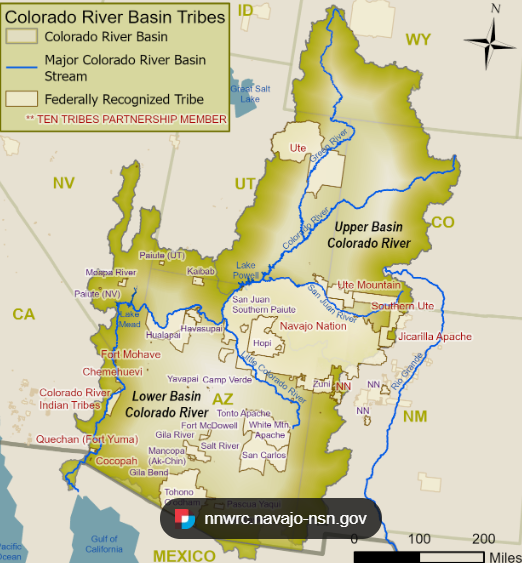
Map of Native Tribes that lived along the Colorado River
For thousands of years, these societies adapted to the realities of an arid landscape. They understood something modern policymakers continue to rediscover: in the American West, water is power.
The river was already generating prosperity long before modern governments, dams, canals, or water districts existed. The challenge facing future generations was not creating the importance of water. It was inheriting the responsibility of managing it.
Building the Modern Basin
The settlement of the American West created a new challenge. Population was growing. Agriculture was expanding. Railroads were opening new territories. Cities were emerging in places where natural water supplies could not support long-term growth.
Visionaries such as John Wesley Powell warned that western development would ultimately be constrained by hydrology rather than geography. He argued that water basins—not political boundaries—should guide long-term planning.

John Wesley Powell (1834-1902) American Geologist, explorer of the American West and Professor at Illinois Wesleyan University
By the early twentieth century, it became clear that competition for Colorado River water could become a permanent source of conflict between states. The response was infrastructure and governance. The Colorado River Compact of 1922 established a framework for allocating water among basin states.
Major projects such as Hoover Dam, Lake Mead, Glen Canyon Dam, Lake Powell, and countless canals, pumping stations, and distribution systems followed. Together, they transformed a seasonal river into one of the largest water management systems ever constructed.
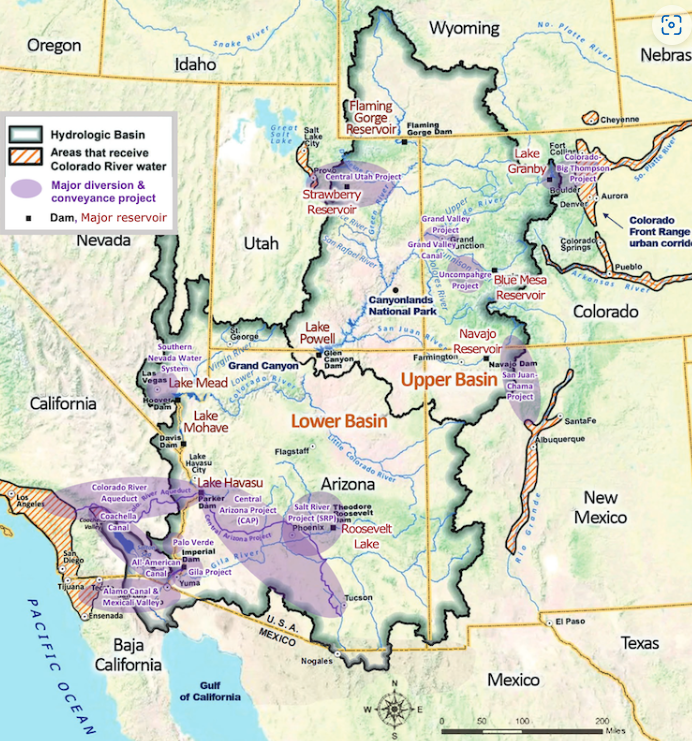
Dams, lakes, and reservoirs in the Colorado River Basin system
The Economic Miracle
The result was extraordinary. The Colorado River Basin now provides water to approximately 40 million people across the American West. It supports some of the fastest-growing metropolitan regions in the United States and irrigates millions of acres of highly productive agricultural land.
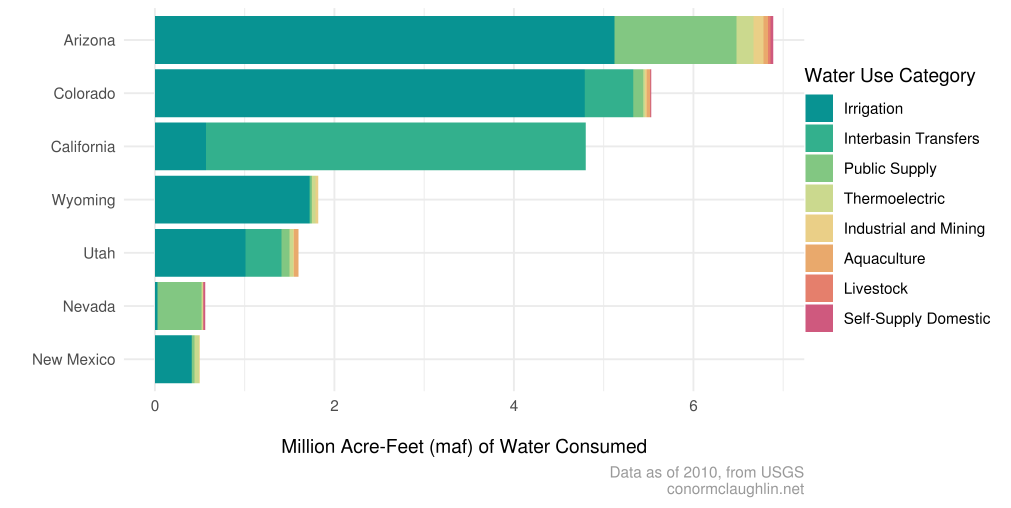
The basin enables food production, energy generation, tourism, manufacturing, logistics, technology, and real estate development on a massive scale. The U.S. Geological Survey has described the basin as supporting a trillion-dollar economy.
Without this infrastructure system, cities such as Phoenix, Las Vegas, and large portions of Southern California would look dramatically different. The Colorado River is no longer simply a river. It is an integrated economic platform that underpins modern western prosperity.
Why Are Water Levels Falling?
The question dominating public discussion today is simple: Why are Lake Mead and Lake Powell declining?
The answer is more complex. Part of the explanation is cyclical. The American West has experienced droughts, including severe multi-decade droughts, throughout recorded history and long before modern industrialization.
Part of the explanation is demographic. The basin now supports far more people, businesses, farms, and industries than it did when many of the original water allocation assumptions were developed.
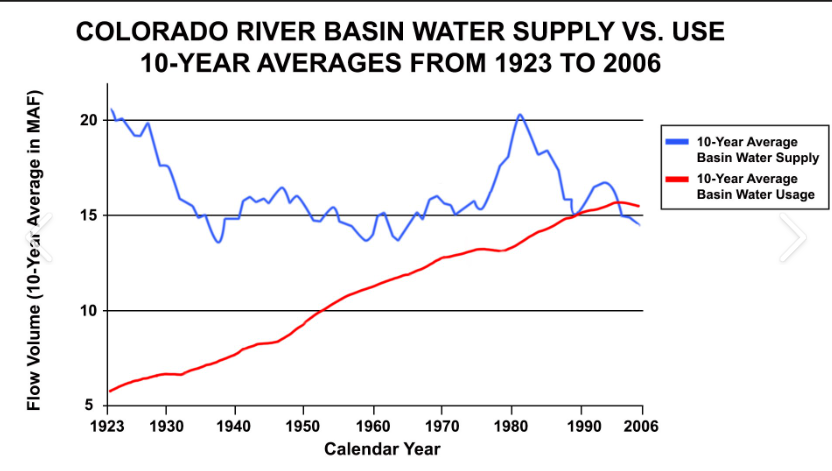
Federal analyses project that, under plausible climate and demand scenarios, the basin could face a supply shortfall on the order of 2.5–4.8 million acre‑feet per year by 2050.
BLM findings to note:
Modeled shortfall:2.5–4.8 million acre‑feet/year by 2050 under high‑stress scenarios.
Timing: several scenarios show critical reservoir triggers in the 2030s–2040s.
Policy takeaway: the BLM recommends pairing demand management with pilots and investments in recycling, aquifer recharge, and renewable desalination.
Part of the explanation is physical. Reservoir evaporation, changing precipitation patterns, reduced snowpack efficiency, and rising temperatures can all influence the amount of water ultimately reaching the system.
Finally, many experts argue that the basin was effectively overallocated from the beginning, with historical water availability proving lower than some early planning assumptions. The challenge is not one single cause. It is the cumulative pressure of multiple forces acting simultaneously.
The Scarcity Mindset
As water levels decline, public discussion increasingly focuses on:
Restrictions
Rationing
Reduced consumption
Scarcity management.
Conservation is important. Responsible stewardship always matters. But conservation alone is not an infrastructure strategy. Many western communities now operate under periodic restrictions, rationing measures, and usage limitations. While these approaches may provide temporary relief, they do little to address the underlying challenge of supporting long-term population and economic growth.
The danger is that societies gradually begin managing decline rather than creating solutions. A civilization cannot conserve its way to prosperity forever.
Toward an ABUNDANCE INFRASTRUCTURE Mindset
The twentieth century transformed the American West through infrastructure: reservoirs expanded storage, canals extended access, treatment plants increased supply, and engineering unlocked new opportunity. The Bureau of Land Management finds that conservation alone will not close the modeled mid‑century gap; the agency recommends pairing demand measures with pilots and investments in recycling, aquifer recharge, and renewable desalination to avoid chronic shortages.
The question for the twenty‑first century is whether we still possess that same ambition. An Abundance Infrastructure mindset asks a different question: instead of only reducing demand, how do we responsibly expand reliable supply?
Priority actions
Water recycling and advanced treatment
Aquifer storage and recovery
Renewable‑powered desalination
Smarter distribution networks and leak reduction
New business models and public‑private financing
Long‑term capital investment for resilient systems
These are not merely engineering projects; they are quality‑of‑life investments. Regulators and conservationists rightly celebrate a growing ethic of using less water and rethinking thirsty landscapes. Yet we must avoid normalizing permanent scarcity. Pursue stewardship while also committing to bold supply‑side innovation so communities can thrive without sacrificing urban greening, agricultural productivity, or ecosystem health.
Conclusion
The Colorado River Basin is one of the most successful infrastructure systems in modern history. It transformed an arid region into a network of thriving cities, productive agricultural zones, industrial centers, and economic engines supporting tens of millions of people.
Yet its success has created new challenges. Population growth, economic expansion, environmental pressures, and changing hydrological realities are forcing a new generation to reconsider how water should be managed.
Images From: