
Why AI Is Becoming an Infrastructure Problem
How the Next Great Technological Revolution May Be Constrained by Power, Water, Land, and Physical Infrastructure
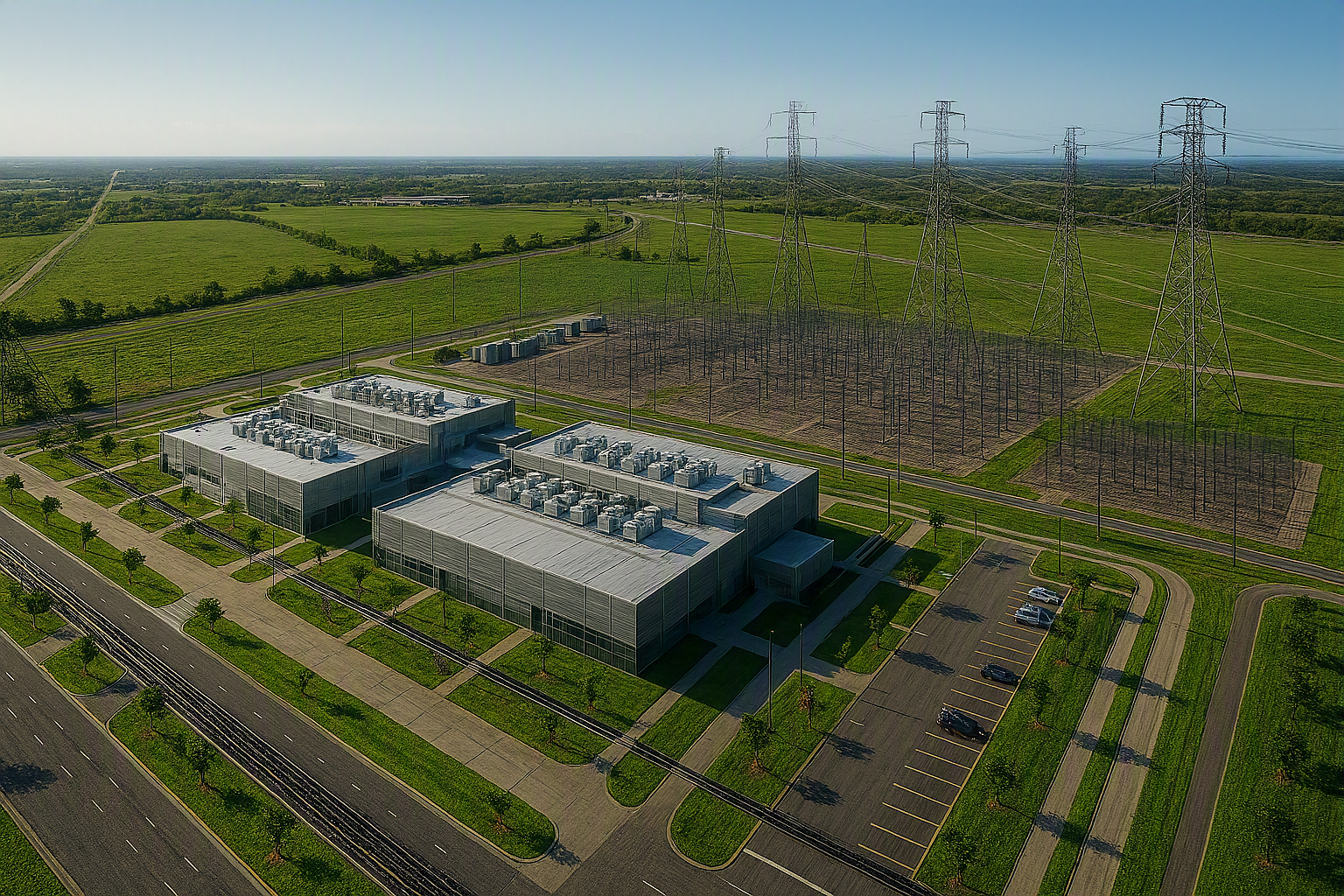
AI’s Phyical Footprint
History reveals a recurring pattern: every major technological revolution ultimately depended upon physical systems that allowed it to scale.
Agriculture required irrigation, storage, transportation, and markets.
Science required universities, laboratories, and institutions.
Industry required railroads, ports, factories, and energy systems.
Electrification required generation plants, transmission networks, and distribution infrastructure.
The Internet required fiber optics, satellites, wireless networks, and data centers.
Today, humanity stands at the beginning of what may prove to be another transformational epoch: the Intelligence Revolution.
While Artificial Intelligence or AI is often described as a software breakthrough, it will be no different. Behind every AI model, chatbot, image generator, scientific discovery platform, or autonomous system lies a rapidly growing physical infrastructure footprint. Data centers, power generation, transmission networks, cooling systems, water supplies, land, and construction capacity are becoming as important to the future of AI as algorithms and computing power.
The age of AI may ultimately be remembered not only as the Intelligence Revolution, but as one of the most consequential infrastructure challenges—and opportunities—since the end of World War II.
From the Information Revolution to the Intelligence Revolution
The Information Revolution transformed the world by enabling humanity to move information at unprecedented speed and scale. Computers digitized knowledge. Telecommunications connected continents. The Internet created a global network through which ideas, data, commerce, and communication could flow almost instantaneously, turning Marshall McLuhan's vision of a 'Global Village' into reality.

Marshall McLuhan (1911–1980) Canadian philosopher and media theorist who coined the term "Global Village" and anticipated the profound social effects of global electronic communications decades before the rise of the Internet
Marshall McLuhan (1911–1980) Canadian philosopher and media theorist who coined the term "Global Village" and anticipated the profound social effects of global electronic communications decades before the rise of the Internet
Billions of people became connected through smartphones, broadband networks, cloud computing platforms, and social media. Every search query, email, financial transaction, GPS coordinate, photograph, scientific paper, and digital interaction contributed to a rapidly expanding body of information. Distance became less important. Information became increasingly accessible. Knowledge that once required a visit to a library could now be retrieved in seconds from virtually anywhere on Earth.
At roughly the same time that the Internet was connecting billions of people, the world was undergoing another transformation. The end of the Cold War ushered in a period of unprecedented global economic integration. Supply chains expanded across continents. Capital flowed more freely across borders. Institutions such as the World Bank, International Monetary Fund, World Trade Organization, and countless regional frameworks helped support an increasingly interconnected global economy.
Many observers believed the world was converging toward a common economic model. Francis Fukuyama famously described this moment as the 'End of History', arguing that liberal democracy and market capitalism had emerged as the dominant framework for organizing modern societies. Whether or not that prediction ultimately proves correct, the decades that followed accelerated the integration of markets, information, talent, technology, and capital on a global scale.

Fukuyama's 'The End of History'
The result was the creation of an unprecedented reservoir of data, computing infrastructure, scientific collaboration, and digital connectivity—the very conditions that would later make AI possible.
The Internet itself emerged from a combination of scientific research, Cold War strategic priorities, university collaboration, and public investment in communications infrastructure. Long before it connected billions of consumers, ARPANET—the precursor to the modern Internet—was designed to connect researchers, institutions, and computing resources across distributed networks. What began as infrastructure eventually became one of the most transformative consumer technologies in human history.
ARPANET - Proposed Map 1970s
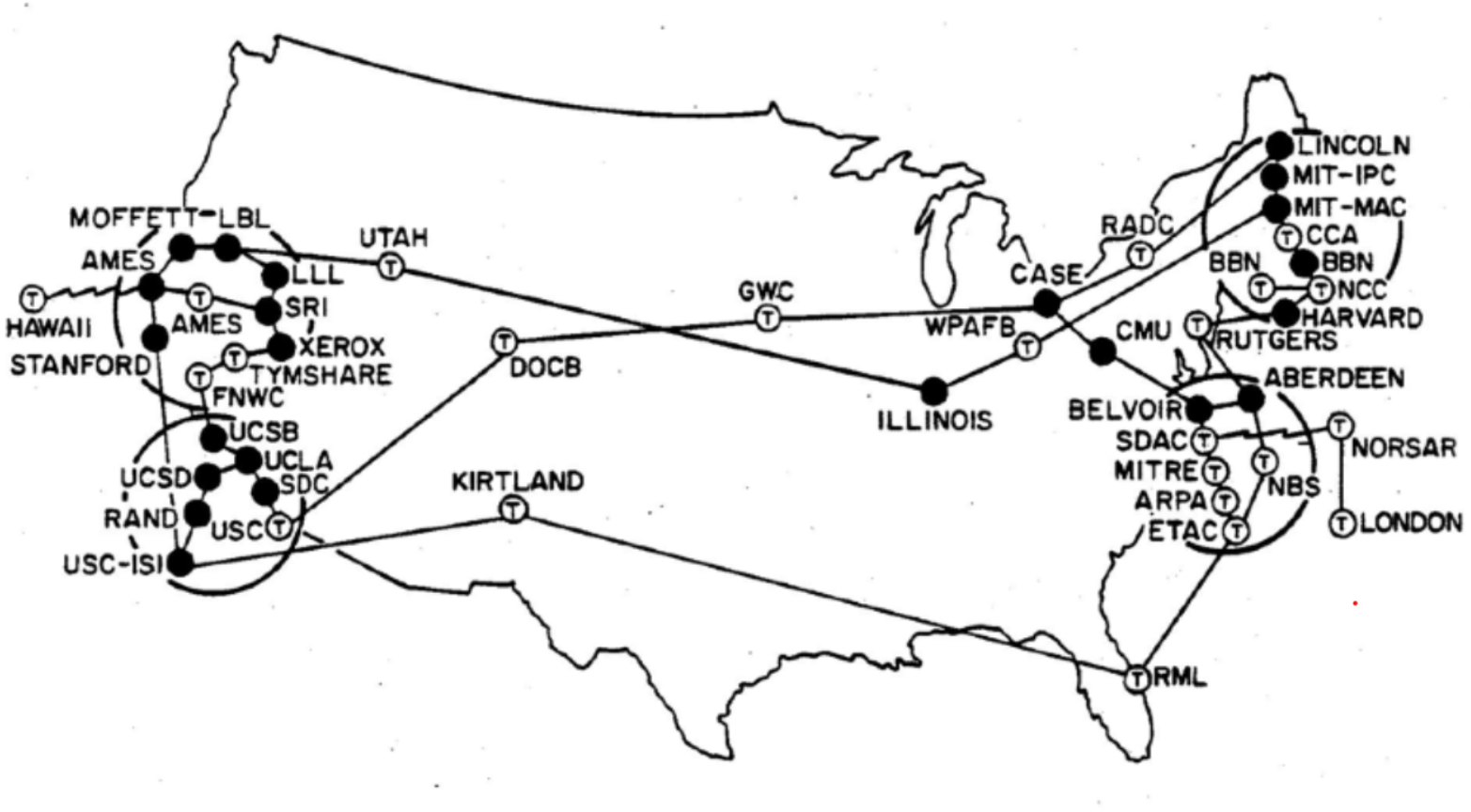
ARPANET - Proposed Map 1970s
The Information Revolution did more than connect people. It reshaped the global economy. Companies such as Microsoft, Amazon, Google, Apple, Meta, and countless others emerged as some of the most valuable enterprises in human history by organizing, storing, distributing, and monetizing information at unprecedented scale.
Entire industries were transformed, new markets emerged, and trillions of dollars of economic value were created through the digitization of commerce, communication, entertainment, and knowledge.
By the early twenty-first century, information had become one of the world's most valuable assets. Data centers became the factories of the digital age. Fiber networks became the railroads of the information economy. Cloud computing became the platform upon which much of modern business operates.
Yet the Information Revolution largely solved only one part of the equation. It allowed humanity to move information. It did not fundamentally change humanity's ability to process information. Despite the exponential growth of data, human cognitive capacity remained largely unchanged. Researchers still had to analyze findings. Engineers still had to evaluate designs. Doctors still had to interpret medical records. Lawyers still had to review documents. Managers still had to make decisions.
The Intelligence Revolution changes that equation. For the first time in history, humanity is developing systems capable of augmenting cognitive work at scale. AI systems can analyze vast datasets, identify patterns, generate designs, write software, summarize complex information, assist scientific discovery, and accelerate decision-making across countless domains.
Just as the Industrial Revolution amplified physical labor, AI has the potential to amplify cognitive labor. This distinction is profound:
the Agricultural Revolution amplified food production.
the Scientific Revolution amplified humanity's ability to generate knowledge.
the Industrial Revolution amplified physical labor.
the Electrification Revolution amplified access to power.
the Information Revolution amplified communication.
The Intelligence Revolution amplifies cognition. The implications extend far beyond technology. Scientific research, healthcare, manufacturing, logistics, finance, education, engineering, government, and countless other sectors are already beginning to integrate AI into their workflows. Organizations that successfully deploy these capabilities may achieve levels of productivity and innovation previously unattainable.
The twentieth century was largely devoted to connecting the world. The twenty-first century may be defined by what humanity does with that connectivity.
AI did not emerge from a laboratory alone. It emerged from decades of accumulated infrastructure: computing networks, communications systems, semiconductor supply chains, scientific collaboration, and digital connectivity.
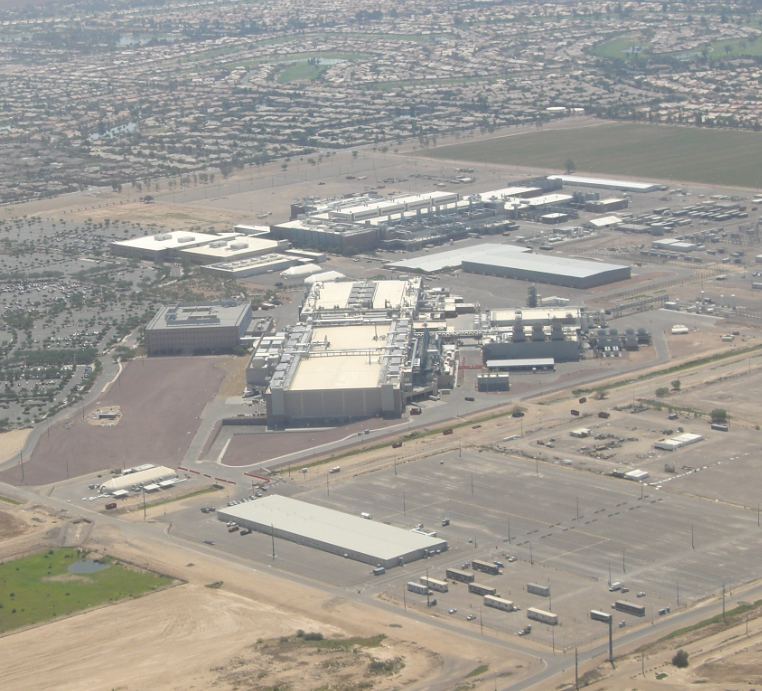
Semiconductor Supply Chains - Intel manufacturing site in Chandler AZ
Many of humanity's greatest technological revolutions began as infrastructure projects before they became consumer products. Railroads connected nations before they transformed commerce. Electrification powered factories before it illuminated homes. The Internet connected research institutions before it connected billions of people.
AI appears to be following the same path. Beneath the headlines, venture capital investments, model benchmarks, and product launches lies a less-discussed reality: every query, every model, every AI-generated image, every scientific simulation, and every autonomous decision ultimately depends on physical infrastructure.
And as AI adoption accelerates, that infrastructure is becoming one of the defining challenges—and opportunities—of the Intelligence Revolution.
The Physical Economics of Intelligence
Unlike most previous technologies that primarily transformed individual sectors, AI has the potential to influence nearly every knowledge-based activity in the global economy. Scientific research, engineering, healthcare, finance, education, manufacturing, logistics, energy, government, and software development are all being reshaped by intelligent systems capable of processing information at unprecedented scale and speed.
The result is one of the largest investment waves in modern history. Governments view AI as a strategic capability. Corporations view it as a productivity engine. Investors view it as a technological platform with the potential to rival or exceed the economic impact of the Internet itself.
Hundreds of billions of dollars are now being deployed across the AI ecosystem. New data centers are being announced at a pace rarely seen in modern infrastructure development. Semiconductor developers are expanding capacity. Cloud providers are racing to secure power supplies. Energy companies are revising long-term demand forecasts. Entire regions are competing to attract AI-related investment.
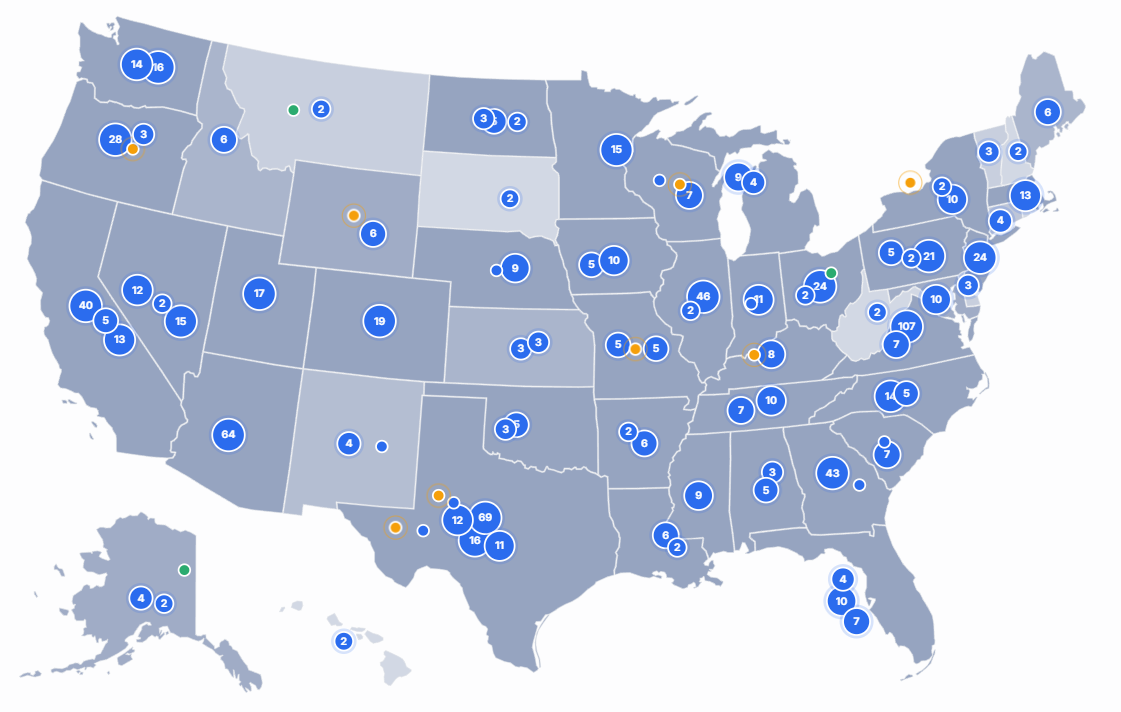
Map of US Data Centers - The Geography of AI Infrastructure
At the center of this transformation lies a simple reality: AI is extraordinarily resource intensive.
Training frontier models requires vast networks of processors, servers, cooling systems, power infrastructure, and communications networks. What appears to users as a simple query or conversation often depends upon one of the most sophisticated industrial ecosystems ever constructed.
For most people, AI appears weightless. The experience feels intangible, as though intelligence itself now resides somewhere in an abstract digital cloud. But the cloud lives somewhere.
Behind every AI model lies a vast physical infrastructure network. Data centers consume enormous quantities of electricity. Cooling systems require water. Facilities require land, transmission infrastructure, communications networks, construction materials, skilled labor, and financing. Semiconductor fabrication depends upon some of the most complex industrial processes ever developed.
The popular narrative often presents AI as a triumph of algorithms. Yet algorithms alone do not create intelligence at scale. Intelligence requires computation. Computation requires energy. Energy requires infrastructure.
The extraordinary economic promise of AI is therefore inseparable from the infrastructure required to support it. Just as human intelligence emerged through biological systems, its evolution into artificial intelligence depends upon power systems, water systems, communications networks, computing infrastructure, and the physical resources required to sustain them.
The question is no longer whether AI will transform the economy. The question is whether society can build the physical systems necessary to sustain that transformation.
And that is where the story shifts from economics to infrastructure.
The Coming Bottlenecks
Power is emerging as perhaps the most immediate bottleneck. The largest technology companies are already securing long-term energy supplies, signing power purchase agreements, investing directly in generation assets, and exploring everything from advanced geothermal systems to small modular nuclear reactors. Utilities across North America, Europe, and Asia are revising demand forecasts as data center growth accelerates. Yet generation alone is not enough. Electricity must be transmitted. Many regions already face transmission constraints that can delay major projects for years. Permitting, interconnection queues, regulatory complexity, and aging grid infrastructure are becoming increasingly important factors in determining where AI infrastructure can be deployed.
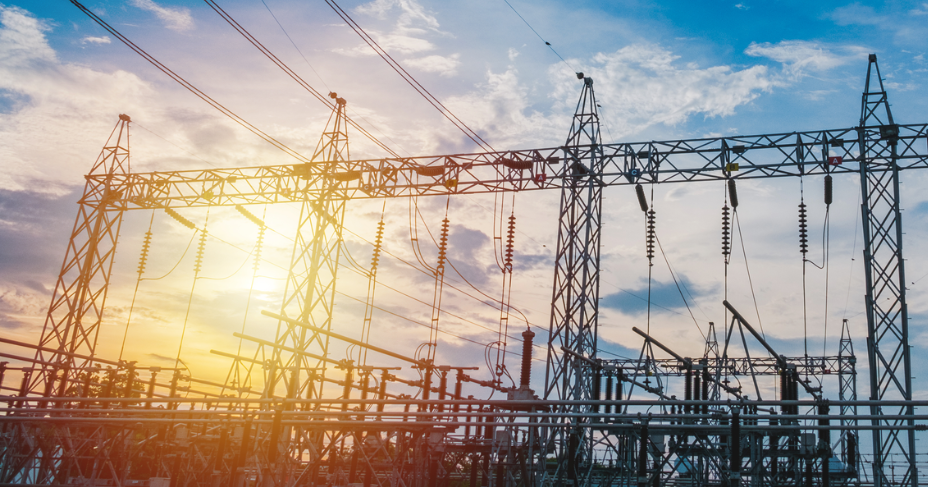
Electrical Substation - Powering the Intelligence Revolution
Water presents a parallel challenge. As computational density increases, so does the need for cooling. In many regions, the future expansion of AI infrastructure may be influenced as much by water availability as by electricity availability. The convergence of AI, energy, and water is creating a new class of infrastructure planning challenges that few societies have fully anticipated.
The semiconductor supply chain remains another critical constraint. Advanced AI systems depend upon a relatively small number of highly specialized fabrication facilities. These facilities require extraordinary capital investment, advanced manufacturing expertise, complex international supply chains, and years of development. Expanding production capacity is neither simple nor fast.
Human capital may become an equally important bottleneck.
The construction, operation, and maintenance of next-generation infrastructure requires engineers, electricians, technicians, construction professionals, operators, and skilled tradespeople. While much of the public conversation focuses on AI replacing jobs, the rapid expansion of AI infrastructure may simultaneously increase demand for many highly skilled physical-world professions.
Land, permitting, and public acceptance introduce additional complexity. A data center may require access to power, water, fiber, transportation networks, and supportive regulatory environments. Increasingly, communities must weigh the economic benefits of AI investment against competing demands on local resources.
The challenge is not that any single bottleneck is insurmountable. The challenge is that many of them are emerging simultaneously:
Power
Water
Transmission
Semiconductors
Labor
Land
Permitting
Financing
Each can be addressed individually. Together, they form the defining infrastructure challenge of the Intelligence Revolution.
The question facing the AI economy is therefore not whether humanity can build increasingly capable intelligent systems. The question is whether we can build the physical foundations required to sustain them.
AI Has Exposed an Infrastructure Imagination Problem
Power, water, transmission, semiconductor, labor, land, permitting, and financing challenges facing artificial intelligence are often discussed as separate problems. Yet AI may be revealing something deeper: the true bottleneck may not be any individual resource. It may be the way modern societies conceive, plan, finance, and develop infrastructure itself.
Technological progress rarely stops because humanity runs out of ideas. More often, progress slows down because supporting infrastructure fails to keep pace with innovation. The deeper challenge is that innovation and infrastructure operate according to different logics. New ideas can emerge in a laboratory, startup, or research institution almost overnight. Infrastructure requires something far more difficult: collective imagination.
Power plants, transmission corridors, water systems, transportation networks, semiconductor fabrication facilities, and data centers must often be planned years or decades before the demand they ultimately serve becomes obvious.
Infrastructure requires societies to invest in futures that do not yet exist. Different societies possess different capabilities, priorities, and visions of the future. The infrastructure they choose to build often reveals what they care about and what they believe is possible.
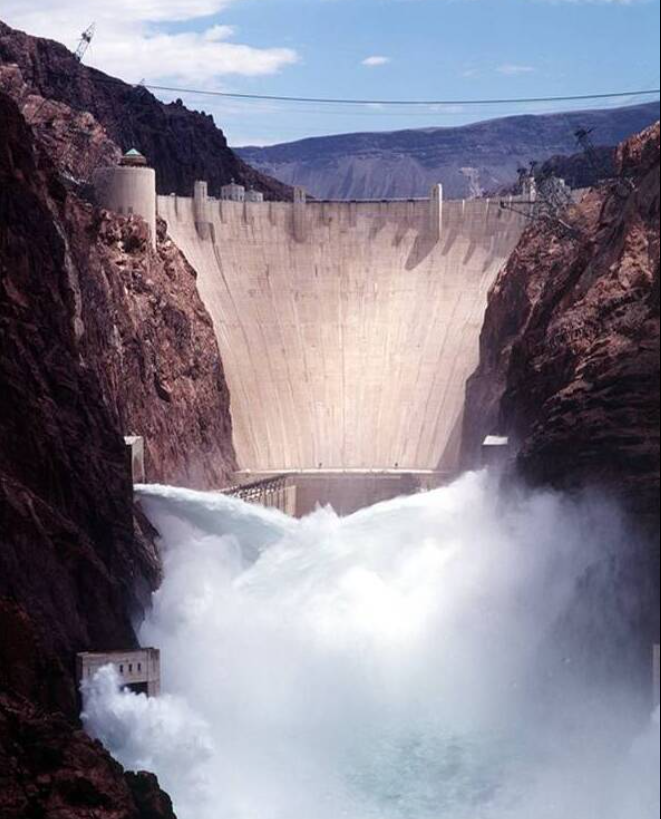
Hoover Dam: One of the most consequential acts of long-term infrastructure planning in modern history
Yet human beings naturally evaluate the future through the lens of the present. We ask whether new systems are necessary based on today's needs rather than tomorrow's possibilities. By the time demand becomes undeniable, the infrastructure required to support it is often years behind.
The result is a recurring pattern throughout history: technological innovation advances at the speed of ideas, while infrastructure advances at the speed of consensus.
For much of the twentieth century, infrastructure was frequently viewed through binary frameworks:
public or private
government or market
national or international
physical or digital.
These distinctions provided useful organizing principles for an earlier era. Yet many of the challenges emerging in today's increasingly post-binary world no longer fit neatly within these categories. AI is simultaneously:
A technology platform
An energy consumer
A water user
An economic development engine
A national security asset
A global infrastructure system
The age of AI may therefore require more than new infrastructure. It may require new ways of thinking about infrastructure itself.
In a previous article here on LinkedIn, 'The Colorado River Basin: Supporting 40 Million Lives and a $1 Trillion Economy,' I have talked about for an Abundance Infrastructure mindset: the idea that societies prosper not merely by managing scarcity, but by expanding the availability of critical resources and capabilities.
AI suggests a second principle: Infrastructure must not only be abundant; it must also be capable of evolving alongside the technologies, industries, and communities it supports.
The challenge facing the Intelligence Revolution may therefore require not only Abundance Infrastructure, but also Symbiotic Infrastructure—an approach in which infrastructure and innovation co-evolve rather than one perpetually lagging behind the other. Societies have spent decades developing sophisticated systems for technological innovation. The next challenge may be developing equally sophisticated systems for infrastructure innovation.
That means innovation not only in technology, but also in imagination, planning, finance, development, governance, materials, construction methods, and institutional design.
AI has not merely exposed a shortage of power, water, transmission capacity, or computing infrastructure. It has exposed the limits of twentieth-century infrastructure thinking. The question facing the Intelligence Revolution is therefore larger than how to build more infrastructure. The question is whether humanity can develop a new infrastructure paradigm capable of matching the pace, complexity, and interconnected nature of the twenty-first century.
Toward A New Infrastructure Paradigm
Every generation inherits not only the infrastructure it builds, but also the assumptions through which it understands infrastructure itself. The Intelligence Revolution is exposing the limits of two long-standing assumptions:
The first is that prosperity is achieved primarily by managing scarcity.
The second is that infrastructure can evolve more slowly than the technologies, economies, and societies it supports.
Both assumptions are increasingly being challenged. History offers examples of societies responding to constraints in different ways. When populations grew beyond the carrying capacity of local food systems, humanity did not merely ration consumption. It developed agriculture. When cities outgrew local water supplies, engineers built aqueducts, reservoirs, and irrigation networks. When industrial economies demanded more energy, societies developed railroads, power plants, transmission systems, pipelines, and electrical grids.
The modern world was not built by accepting limits. It was built by expanding them.
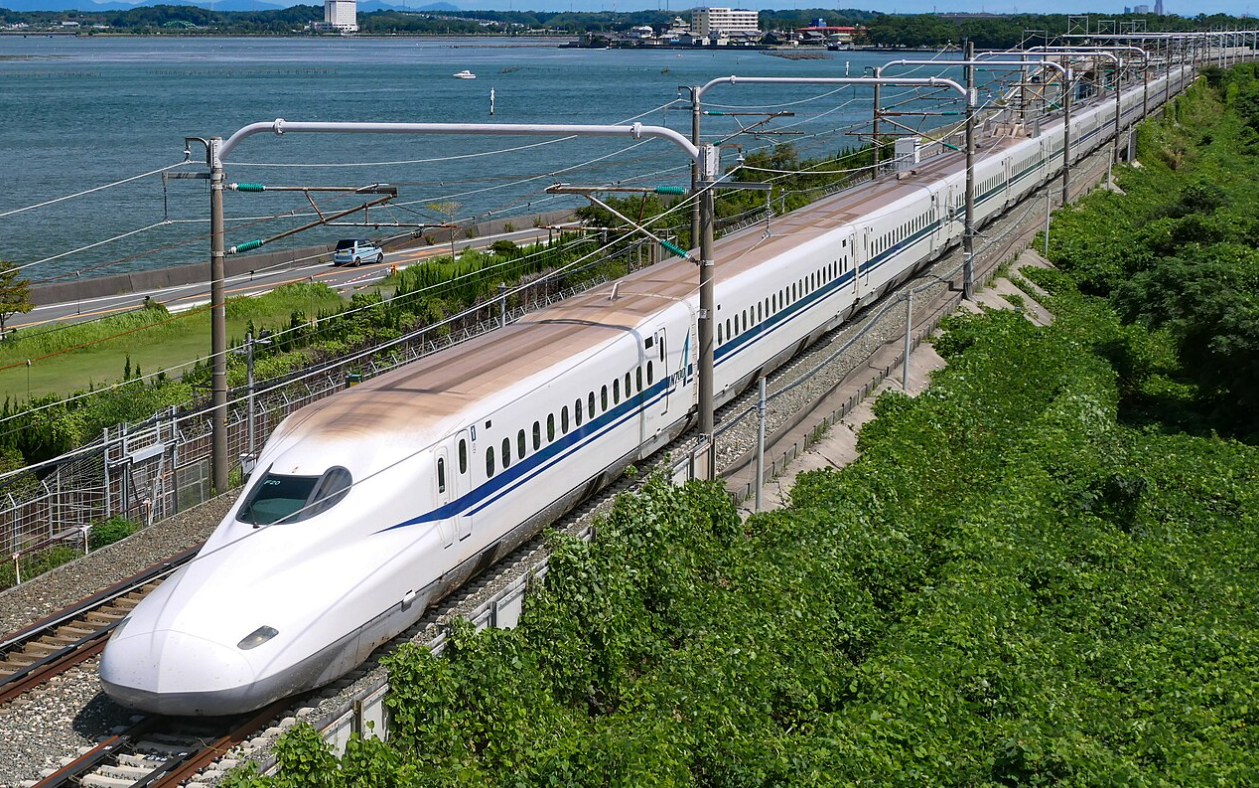
The Japanese Shinkansen - Infrastructure and economic development evolving together
Today, much of the public conversation surrounding infrastructure focuses on conservation, efficiency, restrictions, and demand management. These tools are important. Stewardship matters. Efficiency matters. Waste should be reduced wherever possible. But stewardship alone does not create prosperity. At some point, growing societies must also build.
The emerging demands of AI illustrate this reality with unusual clarity. If AI succeeds, it will require more power, not less. More transmission, not less. More computing capacity, not less. More cooling, more water management, more industrial capability, and more long-term investment.
The challenge before us is therefore not simply technological. It is philosophical.
Do we view growing demand as a problem to suppress? Or do we view it as a signal that new infrastructure must be created?
One response must be Abundance Infrastructure, which begins with a simple assumption: societies prosper not merely by managing scarcity, but by expanding the availability of critical resources and capabilities. Rather than asking how existing systems can be stretched indefinitely, it asks how human ingenuity can responsibly expand the frontier of what is possible.
Yet abundance alone may not be sufficient. The Intelligence Revolution is not only increasing demand for infrastructure. It is accelerating the pace at which infrastructure requirements evolve.
This suggests a second principle: Symbiotic Infrastructure. A Symbiotic Infrastructure mindset recognizes that infrastructure and innovation are no longer separate systems moving on separate timelines. They increasingly co-evolve.
Energy systems influence computation. Computation influences energy demand. Water systems influence data center development. Data centers influence water planning. Infrastructure shapes innovation, and innovation reshapes infrastructure.
The goal is therefore not merely to build more infrastructure. It is to create infrastructure systems capable of evolving alongside the technologies, industries, and communities they support.
In the context of AI, that means investing in the systems capable of supporting intelligence at scale:
Next-generation nuclear technologies
Advanced geothermal systems
Expanded transmission networks
Grid modernization
Energy storage
Water recycling and reuse
Advanced cooling technologies
New approaches to infrastructure finance
Public-private partnerships
Long-horizon capital investment
These are not merely engineering projects. They are civilizational projects which will require infrastructure designed not merely to accommodate growth, but to enable it. This does not imply unlimited consumption, environmental disregard, or reckless expansion. The objective of abundance is not excess. The objective of symbiosis is not constant change. It is capability.
A society with abundant energy can innovate more freely.
A society with abundant water can grow more confidently.
A society with abundant mobility can create greater opportunity.
A society with abundant computational capacity can accelerate scientific discovery, economic productivity, healthcare innovation, and human knowledge.
The future of AI will ultimately depend upon far more than algorithms. It will depend upon whether we possess the vision, engineering capability, institutional capacity, and political courage to build infrastructure that is both abundant and symbiotic.
The age of AI may therefore present a challenge larger than technology itself. It may force humanity to rediscover one of the oldest lessons of civilization:
Prosperity is built not by managing scarcity alone, but by continuously expanding and renewing the systems that make abundance possible.
GLOBAL COOPERATION AND STANDARDS
The Intelligence Revolution is often viewed as a competition. Nations compete for technological leadership. Companies compete for market share. Universities compete for talent. Investors compete for access to the next breakthrough. Competition has always played an important role in technological progress.
Yet history suggests that competition alone is rarely sufficient to sustain civilization-scale systems. The most transformative infrastructure networks in human history depended not only upon innovation, but also upon cooperation:
Railroads required common standards. Shared track gauges, signaling systems, and operating procedures transformed isolated rail networks into integrated transportation systems.
Maritime commerce required navigation rules, communications protocols, and international conventions that allowed vessels from different nations to operate safely across the world's oceans.
Aviation required shared standards governing safety, communications, and air traffic management, enabling a coordinated global air transportation network.
Telecommunications required interoperability standards that allowed billions of devices to communicate across borders and networks.
The Internet itself succeeded because governments, research institutions, and private companies adopted common protocols such as TCP/IP, DNS, and HTTP, transforming thousands of independent networks into a unified global communications platform.
These frameworks did not eliminate competition. They enabled it.
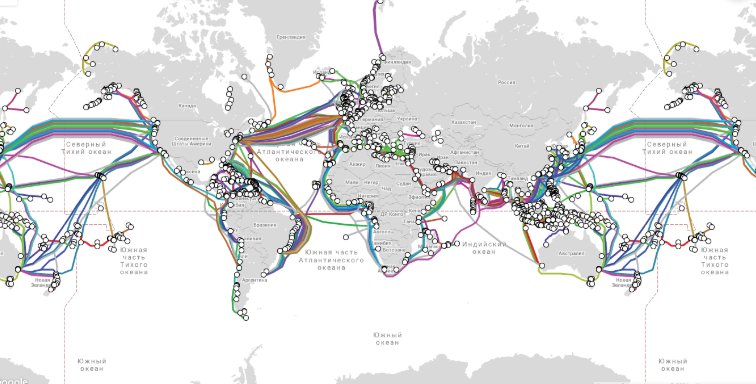
Submarine Cable Map
This distinction may prove equally important in the age of AI. The challenge is not choosing between competition and cooperation. The challenge is creating systems that allow both to coexist.
AI may eventually require a similar foundation.
Although AI models are developed by individual organizations, the infrastructure supporting them is increasingly global. Semiconductor supply chains span continents. Critical minerals may originate in one region, be processed in another, manufactured in a third, and deployed worldwide. Undersea cables connect global communications networks. Scientific research flows across borders. Data centers, cloud platforms, and digital services increasingly operate at planetary scale.
The process has already begun. Governments, standards organizations, research institutions, and private companies are actively developing frameworks for AI governance, interoperability, safety, and risk management.
These efforts represent an important first step. Yet governance is only part of the challenge. Equally important may be the physical infrastructure required to support intelligence at scale.
The future of AI may require new forms of coordination around energy systems, infrastructure planning, communications networks, cybersecurity, semiconductor supply chains, data interoperability, and resource development.
The same principle may apply to infrastructure innovation itself. If the Intelligence Revolution requires infrastructure that is more abundant and more symbiotic, societies may need new mechanisms for coordinating development across traditional boundaries—public and private, national and international, physical and digital.
This does not imply the creation of a global authority governing intelligence. Rather, it suggests that the age of AI may benefit from the same principle that enabled the growth of previous global systems: independent participants operating within shared frameworks.
As AI becomes increasingly integrated into the global economy, the question is no longer simply who will build the most capable systems. The question is whether humanity can develop the technical standards, institutional relationships, development models, and cooperative frameworks necessary to support intelligence at planetary scale.
For most of history, infrastructure existed to move goods, energy, people, and information. Today, humanity is beginning to build infrastructure for intelligence itself. The challenge before us is therefore larger than AI alone.
It is whether our institutions, planning systems, development models, and infrastructure paradigms can evolve as quickly as the technologies they are intended to support.
The future of AI may depend not only on advances in intelligence, but on humanity's ability to build systems that are abundant, symbiotic, and capable of evolving alongside it. And that may require levels of imagination, coordination, and foresight equal to the scale of the opportunity before us.